Optimizing Heptamethyltrisiloxane Packaging for Safe and Efficient Transportation - heptamethyltrisiloxane factory&supplier
heptamethyltrisiloxane factory&supplier
heptamethyltrisiloxane factory&supplier
Heptamethyltrisiloxane
Information Center
Everything you need to know about our products and company
Heptamethyltrisiloxane (CAS 1873-88-7), a critical silicone intermediate with applications in surfactants, coatings, and agricultural additives, requires specialized packaging solutions to ensure stability during transit. Proper handling and transportation protocols not only safeguard product integrity but also align with global regulatory standards. Below, we delve into industry best practices for packaging heptamethyltrisiloxane, addressing technical specifications, safety considerations, and logistical strategies.
1. Packaging Materials and Design
Heptamethyltrisiloxane’s chemical properties—high volatility and sensitivity to moisture—demand robust packaging. Common solutions include:
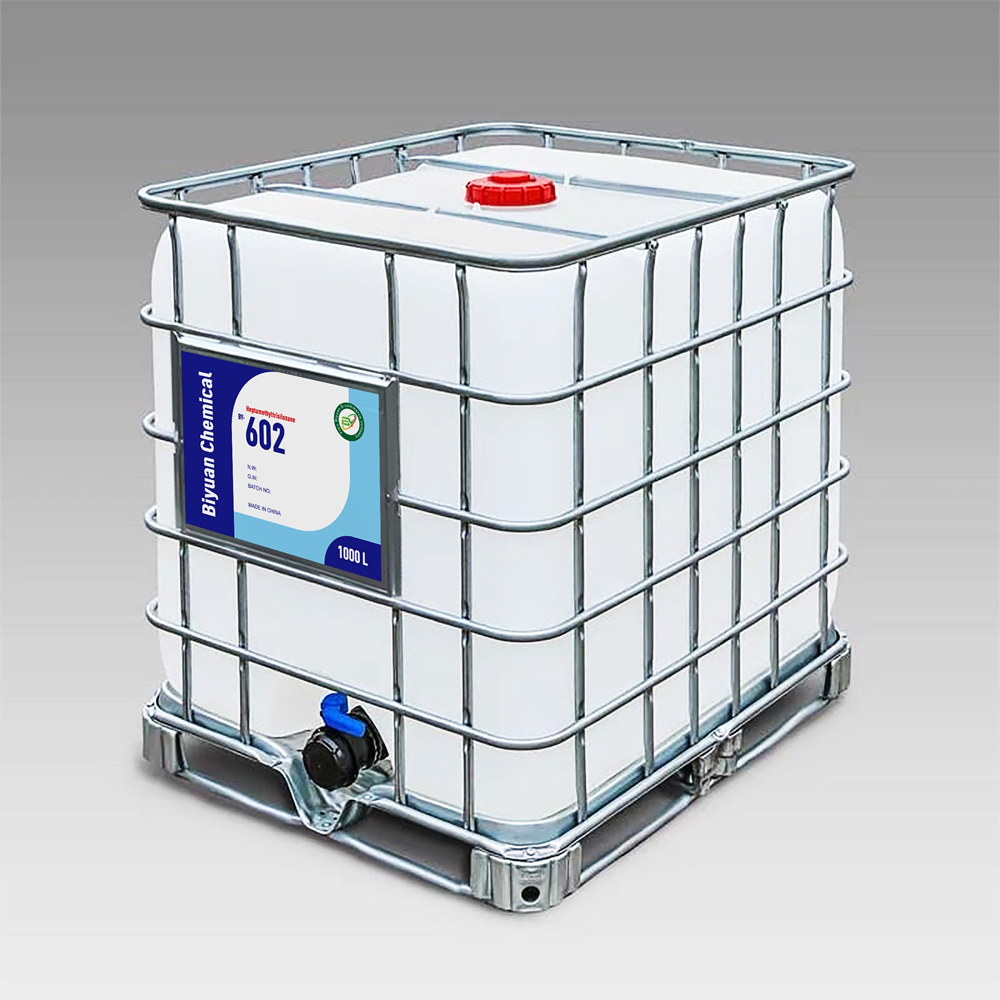
Intermediate Bulk Containers (IBCs): 1000L IBC totes with inner polyethylene liners are widely used for bulk shipments, offering both durability and leak resistance .
Steel Drums: 200L steel drums, often lined with corrosion-resistant coatings, provide secure storage for smaller batches. These drums must meet UN-certified standards (e.g., UN1993) for hazardous material transport .
Flexible Plastic Containers: For laboratory-scale shipments, 25L or 50L PE pails are preferred due to their lightweight and spill-proof design .
Critical design features include airtight seals to prevent oxidation and UV-resistant labeling to avoid degradation from sunlight exposure .
2. Transportation Modes and Compliance
Efficient logistics depend on selecting the right mode of transport while adhering to safety protocols:
Air Freight: Ideal for urgent shipments, air transport minimizes transit time but requires compliance with IATA Dangerous Goods Regulations (DGR). Heptamethyltrisiloxane’s flashpoint (22°C) classifies it as a flammable liquid (UN1993, PG II), mandating specialized handling .
Sea Freight: Bulk shipments often utilize 20-foot or 40-foot containers with reinforced flooring to accommodate IBCs. Humidity control systems are essential to prevent moisture absorption .
Road/Rail Transport: For regional deliveries, temperature-controlled trailers ensure stability, particularly in regions with extreme climates .
All shipments must include SDS (Safety Data Sheets) and proper hazard placarding, such as “Flammable Liquid” and “Keep Away from Heat” warnings .
3. Storage Precautions Before and After Transit
Proper pre-transport storage is vital to maintain product quality:
Temperature Control: Heptamethyltrisiloxane should be stored below 30°C in ventilated, fireproof warehouses. Refrigeration may be required in tropical climates to inhibit thermal decomposition .
Secondary Containment: Secondary leak-proof trays or bunds are mandatory to contain spills during storage. Absorbent materials like silica gel can mitigate minor leaks .
Post-delivery, receivers should inspect packaging for integrity, checking for dents, corrosion, or seal breaches before unloading .
4. Safety and Regulatory Alignment
Compliance with international standards ensures seamless cross-border logistics:
GHS Labeling: Heptamethyltrisiloxane’s hazard pictograms (e.g., flame symbol) and hazard statements (H225, H315) must be prominently displayed on packaging .
Certifications: ISO 9001-certified manufacturers like Biyuan ensure packaging meets REACH, TSCA, and EU CLP regulations. Certifications such as “Technical Excellence Award” further validate product reliability .
5. Partnering with Specialized Suppliers
For businesses prioritizing efficiency and compliance, collaborating with experts like Biyuan offers tailored solutions:
Custom Packaging: Biyuan provides modular packaging options, including IBCs with built-in temperature sensors for real-time monitoring during long-haul shipments.
Global Logistics Network: With partnerships across major ports and air hubs, Biyuan guarantees on-time delivery across North America, Europe, and Asia-Pacific regions.
Technical Support: From SDS preparation to spill-response protocols, Biyuan’s team assists clients in navigating regulatory landscapes and mitigating risks.
Why Choose Biyuan?
Biyuan’s commitment to innovation and safety has made it a trusted partner for industries relying on high-purity siloxanes. By integrating advanced packaging technologies with eco-friendly materials, Biyuan not only meets but exceeds global standards, ensuring your heptamethyltrisiloxane arrives uncompromised.
For inquiries about bulk packaging solutions or regional logistics support, explore Biyuan’s customized services today.
Heptamethyltrisiloxane: Supply, Applications, and Sourcing from Leading Heptamethyltrisiloxane Factory
Introduction to Heptamethyltrisiloxane
Heptamethyltrisiloxane is a specialized organosilicon compound that serves as a critical intermediate in various high-tech industries. Known for its unique structure and properties, this chemical plays a pivota.
What is Heptamethyltrisiloxane? A Comprehensive Guide to Its Properties and Applications
Heptamethyltrisiloxane (CAS 1873-88-7) is a specialized organosilicon compound that has emerged as a critical ingredient in industries ranging from agriculture to cosmetics. This colorless, odorless liquid, with the molecular formula C₇H₂₂O₂Si₃, is renowned for its.
Proper Storage Guidelines for Heptamethyltrisiloxane: Ensuring Safety and Stability
Heptamethyltrisiloxane (CAS 1873-88-7), a colorless liquid widely used in cosmetics, coatings, and agricultural formulations, requires careful handling and storage to maintain its chemical integrity. Improper storage can lead to degradation, safety hazards, or reduced e.
Maximizing Efficiency: A Comprehensive Guide to Heptamethyltrisiloxane Performance
In the specialized world of silicone-based compounds, heptamethyltrisiloxaneholds a unique position due to its versatile applications across various industries. As a key ingredient in personal care products, coatings, textiles, and industrial processes, optimizing its eff.
In the dynamic world of specialized chemical engineering, achieving rapid surface modification, efficient material delivery, and optimized process performance often hinges on strategic components that provide transient yet powerful functional effects. For formulators working with agricultural adjuvants, industrial coatings, personal care products, and high.
In the intricate science of surface engineering, the initial moments when a liquid formulation contacts a solid substrate determine the ultimate success of countless industrial and consumer products. For formulators across agrochemicals, coatings, personal care, and specialty chemicals, achieving instantaneous, uniform wetting on challenging surfaces—while.
Nanotechnology and Heptamethyltrisiloxane: Driving Innovation Across Industries
In the evolving landscape of nanotechnology, heptamethyltrisiloxanehas emerged as a critical building block for advanced material engineering. This unique organosilicon compound serves as a foundational element in creating sophisticated nanomaterials with tailored properties.
Innovative Applications of Heptamethyltrisiloxane: Transforming Industries with Versatile Performance
In the evolving landscape of specialty chemicals, heptamethyltrisiloxane(commercially known as IOTA 2100) is gaining significant attention for its remarkable versatility and performance across multiple industries. This unique organosilicon compound serv.
In the intricate science of formulation performance, the moments immediately following application—where a liquid encounters a surface—determine ultimate efficacy, uniformity, and efficiency. For developers in agrochemicals, coatings, personal care, and industrial processes, achieving instantaneous and flawless wetting on diverse, often challenging substra.
How to Safely Manage Heptamethyltrisiloxane Waste: A Comprehensive Guide
Heptamethyltrisiloxane (CAS 5356-85-4), a volatile organosilicon compound widely used in adhesives, coatings, and silicone rubber production, poses unique challenges for safe disposal. Improper handling can lead to environmental contamination, regulatory penalties, and health risk.
Heptamethyltrisiloxane: Unlocking Unique Applications Through Its Special Properties
Introduction to Heptamethyltrisiloxane
Heptamethyltrisiloxane, also known as Bis(trimethylsiloxy)methylsilane, stands out in the world of specialty chemicals for its remarkable versatility and unique molecular characteristics. With the CAS number 1873-88-7, this colo.
In the sophisticated world of modern formulations, achieving immediate and uniform surface coverage often dictates product success. For formulators in agriculture, coatings, personal care, and industrial processes, the initial moments of application—where wetting, spreading, and adhesion occur—are critical. A component that can instantly modify surface int.
In industrial and agricultural applications, the safety of chemical substances toward aquatic ecosystems is a critical concern. Heptamethyltrisiloxane (CAS 1873-88-7), a siloxane derivative with diverse industrial uses, has sparked debates about its environmental impact. Drawing from regulatory data, toxicity studies, and environmental behavior analyses, t.
Is Heptamethyltrisiloxane a Silicone Compound? Exploring Its Chemical Nature and Applications
Heptamethyltrisiloxane (CAS No.: 1873-88-7) is a compound that has sparked curiosity in both industrial and scientific communities. But what exactly defines its chemical identity? Let’s delve into its structure, properties, and applications to answer whether i.
Heptamethyltrisiloxane: Biodegradability Insights and Environmental Considerations
Heptamethyltrisiloxane (CAS 1873-88-7), a linear siloxane compound with seven methyl groups and three silicon atoms, is widely recognized for its industrial applications in coatings, agrochemicals, and personal care products. However, its environmental behavior—particula.
Introduction – A Comprehensive Analysis
Heptamethyltrisiloxane (CAS 1873-88-7) is a versatile silicone intermediate gaining significant attention across various industries. A common question among manufacturers and importers is whether this chemical meets FDA standards for use in commercial products. The reality is more complex than a simple yes o.
Heptamethyltrisiloxane: Compatibility, Applications, and Industrial Solutions
Heptamethyltrisiloxane (CAS 1873-88-7) is a versatile organosilicon compound known for its active Si-H group, which makes it highly reactive and useful in various industrial processes. Its chemical structure, represented as [(CH₃)₃SiO]₂SiHCH₃, allows it to mix with a range of.
Can Heptamethyltrisiloxane Replace Other Silicone Compounds?
In the evolving landscape of silicone-based chemicals, 1,1,1,3,5,5,5-Heptamethyltrisiloxane (HMTS) has emerged as a versatile performer with the potential to displace traditional silicone compounds across multiple industries. Its unique molecular structure featuring an active Si-H bond provi.
How Regulatory Policies Shape Heptamethyltrisiloxane Production and Market Dynamics
The heptamethyltrisiloxanemarket is navigating an increasingly complex regulatory landscape that directly impacts production processes, supply chain logistics, and global market access. As a versatile silicone compound critical to cosmetics, electronics, and automotive i.
Heptamethyltrisiloxane: Key Applications, Market Analysis, and Biyuan’s Advanced Manufacturing Solutions
Understanding Heptamethyltrisiloxane and Its Industrial Significance
Heptamethyltrisiloxane represents a specialized organosilicon compound with unique chemical properties that make it valuable across multiple industries. This trisiloxane de.
Quality Assurance Strategies for Heptamethyltrisiloxane: Critical Control Points
Heptamethyltrisiloxane (CAS 1873-88-7), a high-purity organosilicon intermediate, plays a pivotal role in applications ranging from agricultural surfactants to cosmetic formulations. Ensuring its quality demands rigorous control across every stage of production and handlin.
The Versatile Role of Heptamethyltrisiloxane in Modern Agriculture
In the ongoing pursuit of sustainable agricultural productivity, the chemical industry has introduced numerous innovative solutions to enhance the efficacy of crop protection products. Among these, Heptamethyltrisiloxane and its derivatives have emerged as a cornerstone technology, .
Introduction
In the continuous pursuit of sustainable and efficient agricultural practices, the crop protection industry is increasingly turning to advanced chemical adjuvants to enhance the performance of pesticidal formulations. Among these, heptamethyltrisiloxane and its derivatives have emerged as particularly valuable components, especially in th.
What is Heptamethyltrisiloxane?
Heptamethyltrisiloxane (abbreviated as MDM) is a low-molecular-weight, highly volatile linear siloxane compound with the chemical formula \(\ce{C7H24O2Si3}\). It is a colorless and transparent liquid at ambient temperature, featuring excellent spreading, penetrating and fast-evaporating properties. Its molecular structure.
Heptamethyltrisiloxane (CAS No.: 1873-88-7) is a colorless transparent liquid containing reactive silicon hydrogen bonds, and a critical basic raw material for synthesizing polyether modified trisiloxane. Benefiting from its special surface activity, it is widely used in pesticide adjuvants, coating additives and pharmaceutical manufacturing. The industria.
Unveiling the Unique Chemical Structure of Heptamethyltrisiloxane: Why It Matters in Modern Materials
In the realm of organosilicon chemistry, few compounds bridge functionality and versatility quite like heptamethyltrisiloxane. For chemists, material scientists, and formulators, understanding its distinct molecular architecture is key to unlocking its .
Polyether-modified heptamethyltrisiloxane (CAS: 27306-78-1) is a nonionic surfactant of silicone-polyether copolymer. It has a molecular weight of 338.66. Its molecule consists of a hydrophobic heptamethyltrisiloxane backbone and hydrophilic polyether segments. Featuring ultra-low surface tension, outstanding spreading and penetrating capacity and excellen.
It is commonly incorporated into skincare items such as moisturizing lotions. It forms a smooth protective film on the skin surface, effectively reducing transepidermal water loss, boosting moisturization and keeping the skin hydrated.
For hair care, it is added to some hair conditioners. It can penetrate into hair fibers, improving smoothness and luste.
1. Basic Information
Chemical Name: Heptamethyltrisiloxane, also known as bis(trisiloxy)methylsilane, 1,1,1,3,5,5,5-heptamethyltrisiloxane CAS No.: 1873-88-7 Chemical Formula: C₇H₂₂O₂Si₃ Molecular Weight: 222.51
2. Hydrogen Content
The total hydrogen content of heptamethyltrisiloxane is 30.9%. Among this, the hydrogen content from Si-H bonds is re.
A Comprehensive Analysis of Heptamethyltrisiloxane’s Physical Properties
Heptamethyltrisiloxane is a versatile organosilicon compound with the chemical formula C7H22O2Si3, known for its unique structural characteristics and valuable physical properties that make it indispensable across various industries. This transparent, colorless liquid posse.
Heptamethyltrisiloxane: The Silicone Powerhouse Revolutionizing Skin Texture
In the evolving world of skincare chemistry, one ingredient has demonstrated remarkable capabilities for transforming skin texture: Heptamethyltrisiloxane. This specialized silicone compound has become an invaluable asset in cosmetic formulations, offering unique properties tha.
In lithium-ion batteries, heptamethyltrisiloxane is mainly used as the core synthetic precursor for functional electrolyte additives. After derivatization and modification, it greatly improves the cycling stability and high-temperature performance of batteries.
Core Mechanism of Action
Form a stable cathode interphase film: The amino-functionalized .
The Multifaceted Efficacy of Heptamethyltrisiloxane in Modern Skin Care
In the ever-evolving world of cosmetic science, certain ingredients stand out for their unique versatility and efficacy. Heptamethyltrisiloxane, a specialized organosilicon compound, has emerged as a powerful functional ingredient that enhances product performance across numerous sk.
Heptamethyltrisiloxane: Revolutionizing Coating Performance Through Advanced Silicone Technology
Introduction
In the competitive landscape of industrial coatings, achieving superior performance while meeting stringent environmental standards has become increasingly challenging. One compound that has emerged as a transformative solution is heptamethyl.
Revolutionizing Heptamethyltrisiloxane Production: A Leap Forward in Industrial Efficiency
The synthesis of heptamethyltrisiloxane (HMCTS), a critical intermediate in silicone chemistry, has recently witnessed groundbreaking advancements. These innovations not only address long-standing challenges in production efficiency but also open new avenues fo.
Optimizing the Purity of Heptamethyltrisiloxane: A Comprehensive Guide
Heptamethyltrisiloxane (CAS 1873-88-7), a critical intermediate in silicone chemistry, is widely used in pharmaceuticals, agrochemicals, and personal care products due to its unique surfactant properties. Achieving high purity in its synthesis and post-processing stages is essential.
In August 2025, the China National Intellectual Property Administration (CNIPA) granted a patent application titled Synthesis Process of 3H-Heptamethyltrisiloxane, with publication number CN120484007A and filing date in July 2025.
According to the patent abstract, the invention falls within the technical field of siloxane synthesis, specifically relatin.
Heptamethyltrisiloxane: Enhancing Agricultural Efficiency through Advanced Silicone Chemistry
In the realm of modern agriculture, efficiency and effectiveness are paramount. Amidst the various adjuvants and surfactants that bolster crop protection products, heptamethyltrisiloxane stands out as a remarkably versatile organosilicon compound. This substanc.
Heptamethyltrisiloxane: Decoding the Factors That Make It Exceptionally Stable
In the realm of organosilicon compounds, few substances command as much attention for their structural resilience as heptamethyltrisiloxane. This organosilicon molecule—comprising a backbone of alternating silicon and oxygen atoms (Si-O-Si) with methyl (-CH₃) groups capping e.
Maximizing Agrochemical Performance: The Science Behind Heptamethyltrisiloxane
Introduction
In modern agricultural practices, achieving optimal efficacy of crop protection products while minimizing environmental impact remains a significant challenge. The solution often lies not just in the active ingredients but in the advanced adjuvants that enhanc.
Heptamethyltrisiloxane is emerging as a transformative functional material in the pharmaceutical industry. This volatile silicone derivative combines low viscosity with high permeability, offering unique solutions for advanced drug delivery systems and medical device technologies.
Certified USP Class VI and compliant with ISO 10993-5 standards, heptamet.
Heptamethyltrisiloxane is transforming the personal care industry through its unique volatile characteristics and exceptional spreading properties. This lightweight silicone fluid delivers instant sensory enhancement while providing functional benefits across various product categories.
Heptamethyltrisiloxane meets rigorous safety standards including RE.
Heptamethyltrisiloxane is emerging as a powerful adjuvant in modern agriculture, leveraging its unique properties to enhance crop protection product performance. This organosilicone compound acts as a super-spreader, dramatically improving the efficacy of pesticides, herbicides, and fungicides through superior surface coverage and penetration.
The mater.
Heptamethyltrisiloxane is gaining recognition as a versatile performance additive in various industrial sectors due to its unique combination of low viscosity, high volatility, and exceptional surface activity. This organosilicone compound serves as an efficient process aid and functional modifier across multiple applications.
Heptamethyltrisiloxane off.
Contact Us
We're here to help with any questions or inquiries you may have
Contact Information
Address
No. 116, Jiangdong Street, Yiwu City, Jinhua City, Zhejiang Province,China